
Applications
- Applications
- Poultry
- Pigs
- Milk-fed Calves
- Dairy Cows
- Salad crops and soft fruit
Early disease detection across livestock, poultry and crops
RoboScientific applies volatile organic compound, or VOC, sensing technology to detect early changes in the health status of animals, crops and stored produce.
All living organisms release VOCs into the air or breath. When disease, infection or stress begins to affect an organism, these VOC patterns can change before visible symptoms are obvious. RoboScientific’s technology is designed to recognise these changes and provide earlier, non-invasive insight into disease risk.
Our platform combines proprietary sensor arrays, automated sampling and machine-learning analysis to identify disease-related VOC patterns in practical farm and food-production environments. This allows health monitoring to move beyond occasional visual checks or laboratory testing towards more regular, automated and data-led surveillance.
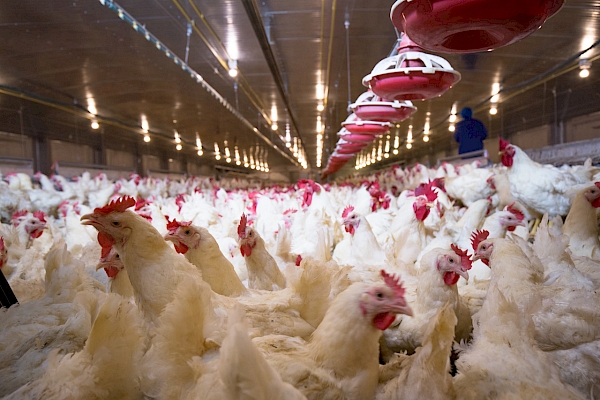
RoboScientific is developing applications across poultry, pigs, calves, dairy and protected crops, with poultry as the lead commercial focus. The same core VOC sensing platform can be adapted for different environments, including poultry houses, pig buildings, calf feeding systems, dairy milking systems, polytunnels and crop-storage facilities.
By providing earlier warning of disease, RoboScientific aims to help producers reduce losses, improve welfare, target interventions more effectively and support more resilient, sustainable food production.
A future-proof platform for detecting disease in real-time
Future-proofing against the next pandemic - Roboscientific will have the capability to respond within weeks to a new disease by developing a new sensor array to target the new disease and swapping it into the monitor or individual testing device.
RoboScientific has developed a fast, efficient method of targeting suitable organic semiconductor candidates which respond to specific VOCs. Working with some of the leading researchers, commercial organisations and agricultural companies, we have a programme of research projects that continue to stretch the envelope of knowledge and increase the effectiveness of the monitoring systems we are developing.
The Roboscientific Sensor Arrays are specific for each application and can be changed as a module within the unit should the application need change. With Covid-19, should another virus develop into a significant pandemic disease, we have the capability to quickly develop a new sensor which can be inserted into the same monitoring device for rapid delivery of monitoring indoor spaces for the presence of the new disease.
Results achieved indicate we can deliver a high degree of accuracy from non-invasive sampling testing people, livestock and plants for a range of diseases. The Sensor Arrays are modular, making it possible to change the target diseases of a monitor by swapping the sensor array in the device.
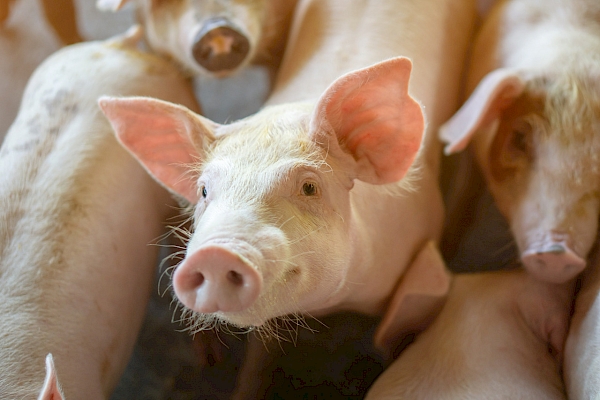
Pigs
Initial feasibility studies have been completed to establish we can detect changes in pigs which wold indicate the onset of disease in pigs. We are now developing from that work to create a non-invasive disease detection platform for pigs.... More
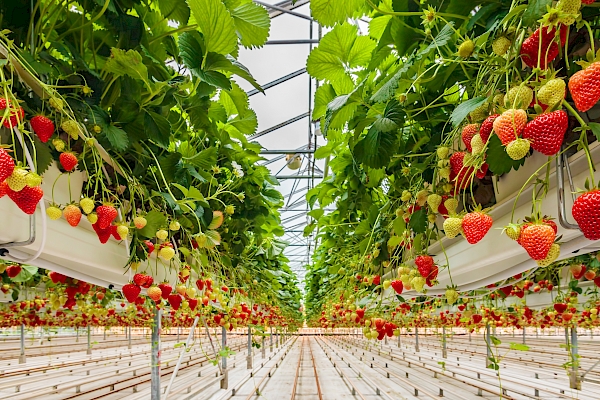
Salad crops and soft fruit
RoboScientific is exploring VOC-based air monitoring for protected crops, including soft fruit, salad crops and herbs. The technology has the potential to detect early disease-related changes in the growing environment, supporting more targeted intervention and reduced crop losses.... More