
Dairy Cows
Non-invasive breath testing for earlier insight into dairy cow health
Breath testing is a proven, non-invasive approach for identifying disease-related changes in animals. As disease processes affect metabolism, they can alter the volatile organic compounds, or VOCs, present in breath. RoboScientific is seeking funding and development partners to explore how this approach could be applied to dairy cow health.
The proposed system would integrate breath sampling into automated milking parlours and robotic individual milking systems, allowing cows to be tested routinely as part of normal daily milking. This could create a practical route to regular health monitoring without additional handling, stress or disruption to farm routines.
RoboScientific’s sensor technology has the potential to analyse changes in breath VOC profiles and investigate whether disease-related patterns can be identified before outward symptoms appear. In dairy herds, this could be particularly valuable for diseases such as bovine tuberculosis and Johne’s disease, where earlier identification of infected or at-risk animals could help reduce disease transmission and limit the wider impact on the UK dairy herd.
Significant development and validation work is still required to establish how effective the system could be in this application. Further funding is now needed to progress the work from concept and early-stage development towards practical validation in commercial dairy environments.
Potential dairy disease applications
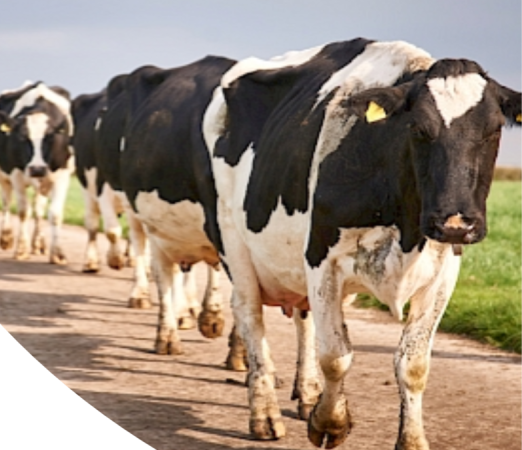
Dairy herds face major health and productivity challenges from diseases such as bovine tuberculosis, Johne’s disease and sub-clinical ketosis. These conditions can be difficult to detect early, with current testing often relying on periodic, labour-intensive or stressful methods.
RoboScientific’s breath-based VOC sensing platform has the potential to support earlier, non-invasive detection by analysing biomarkers present in a cow’s breath during normal milking. With further funding and validation, the system could be developed for use in automated milking parlours and robotic individual milkers, allowing cows to be monitored routinely without handling or restraint.
For diseases such as bTB and Johne’s disease, earlier identification of infected or at-risk animals could help reduce transmission, support faster veterinary decision-making and lessen the long-term impact on the UK dairy herd.