
Dairy Cows
- Applications
- Poultry
- Robotically fed calves
- Dairy Cows
- Pigs
- Salad Crops
Automatically monitoring the health and condition of your cattle
Early stage trials to detect disease
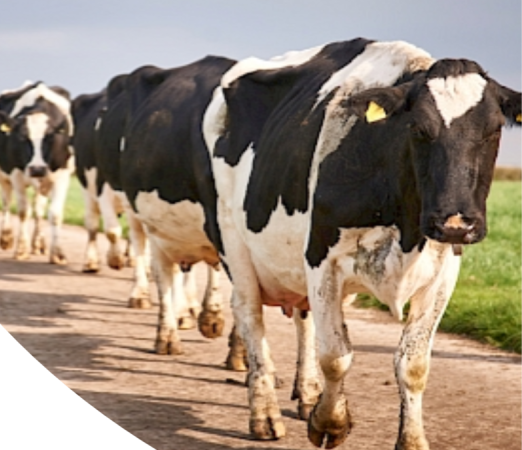
Dairy herds continue to face major challenges from three significant and costly diseases: bovine Tuberculosis (bTB), Johne’s Disease, and sub-clinical Ketosis. These conditions reduce productivity, increase culling rates, add labour pressures, restrict cattle movement, and compromise animal welfare. Early detection remains difficult, relying on labour-intensive, stressful, and often infrequent testing. Our breath-based monitoring technology has the potential to change that—but requires investment to become a reality.
Building on RoboScientific’s proprietary volatile organic compound (VOC) sensing platform, the proposed system will deliver automatic, non-invasive, real-time detection of these diseases by analysing biomarkers naturally present in a cow’s breath. Because it captures breath during normal behaviour—either while cows are being milked or while using robotic milking units—the technology has the potential to provide consistent, passive surveillance without handling or restraint.
With the necessary funding, this system could be engineered for wide application across the dairy sector, including traditional milking parlours and individual robotic milkers, making it suitable for both large and small herds. Earlier detection would reduce disease spread, improve treatment outcomes, and strengthen long-term herd performance. Automated monitoring would also ease labour demand, reduce stress around testing, and provide farmers with greater confidence in the health status of their cows.
For the industry, the benefits could be transformative: lower testing costs, enhanced biosecurity, reduced losses, improved welfare, and more sustainable production. For farmers, it offers a practical and powerful tool to manage herd health more proactively. And for animals, it provides earlier intervention and better welfare through a completely non-invasive approach.
This technology has the potential to redefine disease control in dairy farming—delivering real-time insight, reducing risk, and supporting a more resilient and productive future for the sector. Investment now will bring this breakthrough closer to commercial reality.