
Egg-laying Flocks
A New Approach to Safeguarding Layer Flock Health Through Air Monitoring
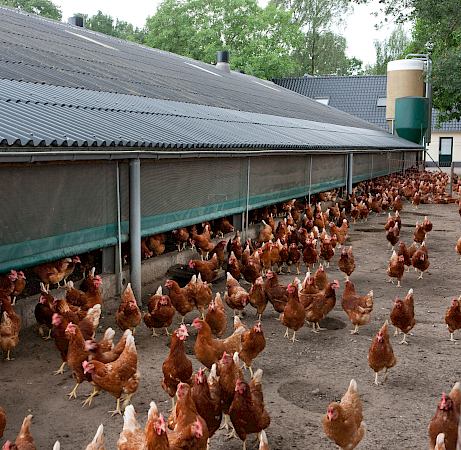
Early disease detection is just as critical for egg-laying flocks as it is for broilers, but the pressures are different. Laying hens remain in production far longer, which means even mild, early-stage illness can affect performance for weeks or months if not identified quickly. Subtle health challenges can reduce lay rate, weaken shell quality, and compromise overall flock resilience long before visible symptoms appear. Because routine checks only capture what can be seen at a single moment in time, the earliest changes are often missed.
Air-based detection offers a new level of insight. By monitoring the air inside layer houses, the system can identify early signs of disease or stress before they manifest in the birds themselves. This is practical even for free-range flocks, which must be brought indoors overnight for safety—providing a reliable window for indoor sampling and automated monitoring without disturbance.
Egg-laying flocks also face a different disease landscape from broilers, including conditions and pathogens that require new sensor profiles. For that reason, dedicated sensor arrays are being developed and trialled specifically for layer environments to ensure accurate, flock-appropriate detection. Automated air collection, high-sensitivity analysis, and alerting systems combine to give producers an early signal when shed conditions begin to change, offering time to act, prevent spread, and protect ongoing egg output.
This approach provides a fast, non-invasive early warning system tailored to the needs of modern layer production—supporting better welfare, stronger performance, and greater protection across the flock’s full laying cycle.